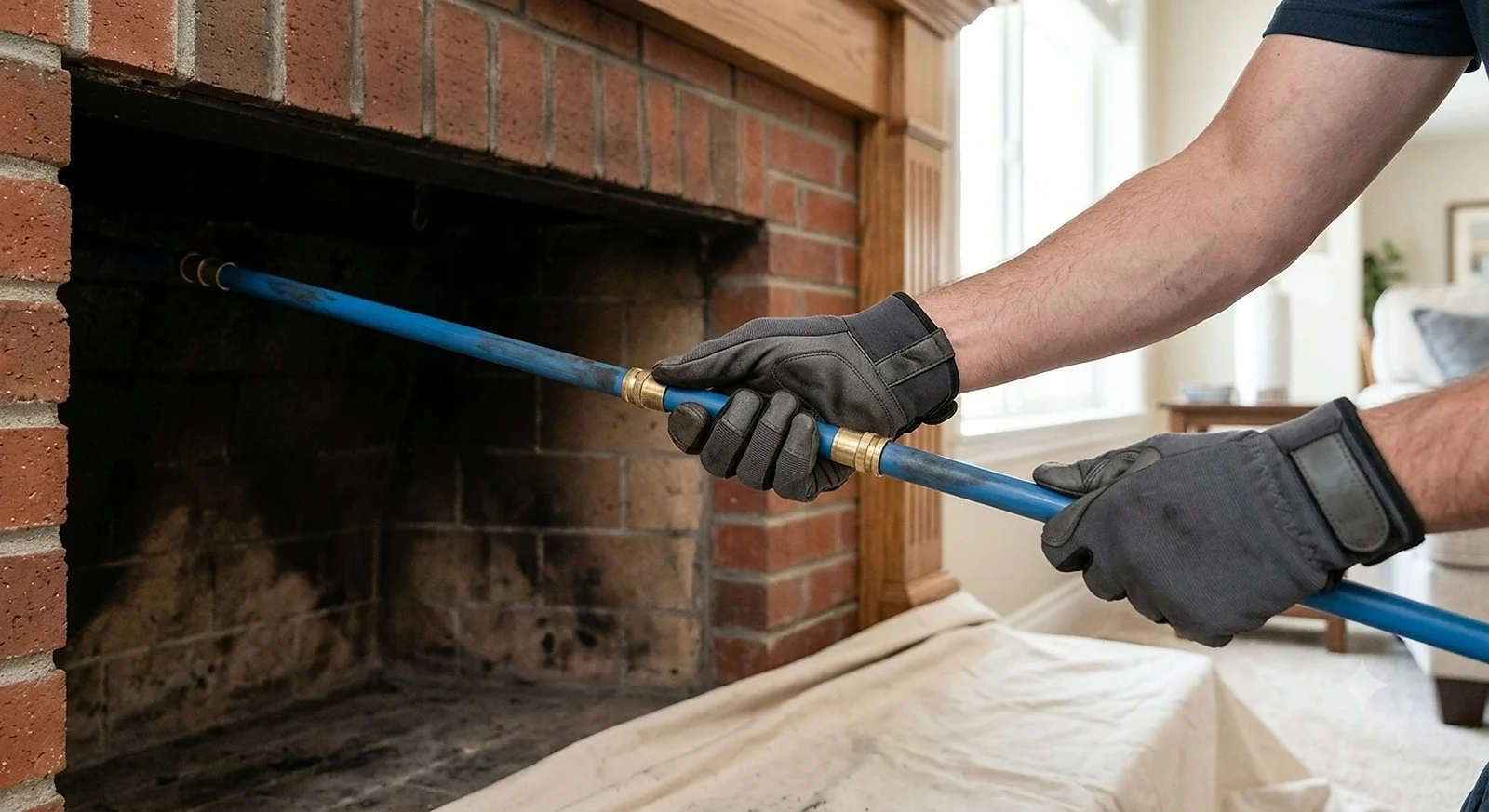
Your chimney may need cleaning when you can see soot or creosote, debris is falling into the firebox, a smoky odor is getting stronger, or the fireplace is not drafting the way it normally does. Those signs do not all prove that cleaning is the only answer. An inspection helps separate removable buildup from a blockage, damaged component, moisture problem, or venting issue.
| Sign | What it may indicate | Best next step |
|---|---|---|
| Visible black or brown deposits | Soot or creosote on accessible surfaces | Sweep and inspection |
| Debris in the firebox | Loose deposits, nesting material, or masonry fragments | Inspect before assuming it only needs cleaning |
| Strong smoky odor | Creosote, ash, moisture, or air moving down the chimney | Sweep plus diagnosis of the odor source |
| Smoke entering the room | Damper, blockage, pressure, sizing, or buildup problem | Stop repeated testing and schedule an inspection |
| Animal sounds or nesting material | A possible flue obstruction | Inspection and appropriate removal |
| Unknown service history | The chimney condition and deposit level are not documented | Start with an inspection |
| Evidence of a past chimney fire | Possible heat damage beyond ordinary buildup | Evaluation before further use |
1. You can see soot or creosote
Soot is usually powdery. Creosote can appear flaky, crusty, sticky, tar-like, or shiny and hardened. Both are products of combustion, but creosote deserves particular attention because it is combustible.
A flashlight view from the cold firebox may reveal deposits near the damper or lower smoke chamber. That view is limited. It cannot show the full flue or determine whether the visible material represents the condition of the entire chimney.
Visible deposits are a reason to schedule a chimney sweep, not a reason to scrape material loose and leave it inside the system. Mechanical sweeping is intended to loosen deposits and remove the resulting debris from the chimney and fireplace.
2. Material is falling into the firebox
Loose black flakes may be soot or creosote. Twigs, leaves, or nesting material may point to an obstruction. Pieces that look like mortar, tile, or masonry need a different response because they may indicate deterioration rather than ordinary cleaning needs.
This is where a chimney inspection matters. The goal is to identify what fell, where it came from, and whether the system needs cleaning, repair, or both.
3. The fireplace has a stronger smoky odor
Creosote has a recognizable smoky smell that can become more noticeable when indoor air is being pulled down the chimney. Ash, moisture, and organic debris can also create odors.
A sweep may reduce the amount of odor-producing residue. It may not correct the pressure pattern that is drawing chimney air into the room. When the smell returns soon after cleaning, the system and the house airflow should be considered together.
4. The fireplace is drafting poorly
A slower draft or smoke spilling toward the room can happen when deposits or debris reduce the venting path. It can also be caused by a damper problem, a cold flue, negative indoor pressure, an unsuitable fireplace-to-flue relationship, or damage elsewhere in the system.
Cleaning is appropriate when buildup is part of the problem. It should not be treated as a universal fix for every smoky fireplace.
5. You hear animals or find nesting material
Birds and other animals can enter an open or damaged chimney termination. Nesting material can restrict the flue even when the fireplace has not been used recently.
Do not light a fire to test whether the blockage will clear. An inspection can identify the obstruction and determine what type of removal is appropriate. After the flue is clear, the chimney cap and termination can be evaluated.
6. You do not know when the chimney was last serviced
A recently purchased home, a rarely used fireplace, or incomplete maintenance records can leave the chimney condition unknown. Low use does not rule out debris, nesting material, deterioration, or moisture entry.
An annual inspection is the maintenance baseline recommended by CSIA. Cleaning is then based on what the inspection finds and how the system has been used.
7. You suspect a previous chimney fire
Some chimney fires are loud, but others can go unnoticed. Puffy creosote, warped metal, damaged flue tiles, heat-damaged components, or creosote fragments outside the chimney are among the conditions professionals look for after a suspected event.
This is not a routine cleaning decision. The system should be evaluated before it is used again.
Cleaning, inspection, or both?
Choose a sweep when accessible buildup is already known and removal is the main need. Choose an inspection when the history is unknown, material may be damaged, smoke is entering the room, or the cause of the symptom is uncertain.
Many appointments involve both functions: the system is evaluated, deposits are removed when needed, and the homeowner receives a clear explanation of anything that deserves further attention.
What a VANTOR sweep covers
A VANTOR sweep addresses the firebox, damper, and accessible flue. The visit includes a plain-language summary of the findings. It does not turn an unknown structural or venting condition into a cleaning-only problem.
Homeowners can review service availability through the Boise service area page.
Frequently asked questions
Can I tell from the firebox whether the whole chimney is dirty?
No. You may see lower deposits, but much of the flue is outside direct view.
Does a smoky smell always mean the chimney needs sweeping?
No. Creosote can cause odor, but moisture, debris, ash, and negative pressure can contribute too.
Can a cleaning log replace professional sweeping?
CSIA states that chemical products do not replace mechanical sweeping and removal of loosened debris.
Should a rarely used chimney still be inspected?
Yes. Obstructions and deterioration can develop even when little wood has been burned.
What should I schedule when I am unsure?
Start with an inspection. It provides the information needed to decide whether cleaning or repair is appropriate.
Sources reviewed: Chimney Safety Institute of America homeowner resources and chimney-fire prevention guidance.